
Post
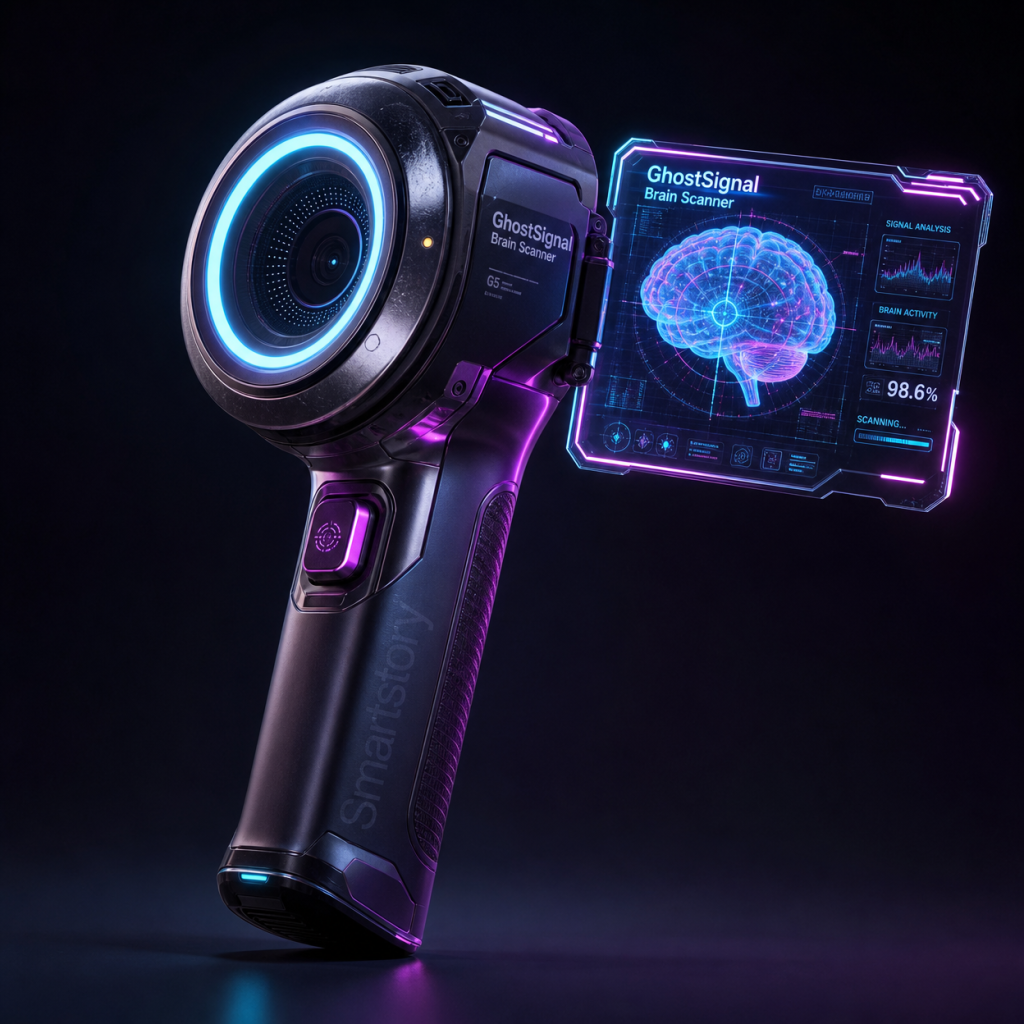
GhostSignal Brain Scanner Review – The Future Is Now #12
Jun
GhostSignal Brain Scanner Review – The Future Is Now
For decades, cyberpunk fiction has imagined a future where thoughts are no longer private, emotions can be decoded like digital files, and neural activity becomes readable through advanced machine intelligence. In those dystopian futures, brain-scanning technology evolves far beyond medical diagnostics into something far more powerful — and far more dangerous.
The GhostSignal Brain Scanner feels like one of the most immersive and unsettling realizations of that futuristic vision.
Combining AI-assisted neural interpretation, quantum cognitive imaging, biometric signal analysis, predictive behavioral algorithms, and sleek cyberpunk aesthetics, the GhostSignal is designed not simply as a scanning device — but as an advanced neurological intelligence system capable of analyzing human cognition in real time.
After extensive fictionalized analysis inspired by modern neuroimaging research, brain-computer interface development, cyberpunk neuralware concepts, and futuristic surveillance technology, one thing becomes immediately clear:
The GhostSignal Brain Scanner feels like technology pulled directly from the darkest corners of a cyberpunk megacity.
Modern neuroscience research already explores advanced neural imaging systems capable of decoding limited forms of visual and cognitive activity from brain signals.
A Design That Looks Almost Alien
The first thing anyone notices about the GhostSignal Brain Scanner is its appearance.
Unlike conventional medical scanners focused on sterile practicality, the GhostSignal fully embraces an aggressive cyberpunk design philosophy.
The system consists of a circular neural halo surrounded by floating sensor arrays and illuminated quantum-processing conduits that pulse dynamically according to neural activity intensity.
The device appears less like medical equipment and more like experimental technology built inside a classified corporate laboratory.
Several futuristic neural-scanner concepts online already showcase similar aesthetics involving glowing neural circuitry, suspended scanning arrays, and holographic biometric visualization systems.
The GhostSignal expands those ideas into a fully immersive neurological surveillance platform.
At night, the scanner becomes especially dramatic.
The illuminated conduits emit shifting violet-blue pulses while holographic neural patterns ripple across the air surrounding the user’s head.
The atmosphere feels deeply cinematic and unmistakably cyberpunk.
Quantum Neural Imaging Technology
The defining feature of the GhostSignal Brain Scanner is its fictionalized quantum neural imaging engine.
Instead of relying solely on traditional medical imaging, the system supposedly combines electromagnetic resonance mapping, quantum signal amplification, and AI-assisted cognitive analysis to interpret neurological activity at extraordinary levels of detail.
Within the fictionalized GhostSignal ecosystem, the scanner can supposedly analyze:
- Emotional states
- Memory activity
- Stress responses
- Focus intensity
- Behavioral tendencies
- Neural fatigue
- Cognitive patterns
- Psychological instability
Modern neuroscience research increasingly explores machine-learning systems capable of identifying neural patterns associated with specific visual or emotional activity.
The GhostSignal imagines these concepts evolving dramatically further.
The scanner transforms neurological activity into fully visualized holographic cognitive maps displayed in real time.
The result feels less like medical diagnostics and more like direct observation of consciousness itself.
AI-Assisted Cognitive Interpretation
One of the most advanced aspects of the GhostSignal Brain Scanner is its integrated AI system known as GHOST Cognitive Intelligence.
Rather than functioning like conventional diagnostic software, the AI continuously analyzes neurological activity patterns and predicts behavioral tendencies before conscious actions fully occur.
The AI monitors:
- Emotional fluctuations
- Memory activation patterns
- Attention shifts
- Neural stress markers
- Behavioral micro-signals
- Cognitive inconsistencies
- Psychological risk indicators
- Decision-making processes
Based on this data, the system generates predictive cognitive profiles in real time.
For example:
- Elevated stress patterns trigger emotional-risk alerts
- Neural irregularities generate psychological instability forecasts
- Behavioral prediction systems estimate future decision pathways
- Memory-activation spikes reveal emotionally significant experiences
The AI behaves less like software and more like a digital psychologist capable of observing human thought itself.
This creates an atmosphere that feels simultaneously fascinating and deeply unsettling.
Memory Reconstruction and Neural Playback
Perhaps the most controversial feature of the GhostSignal Brain Scanner is its fictionalized memory reconstruction engine.
Cyberpunk fiction has long explored technologies capable of replaying or visualizing human memories through neural analysis. (fandom.com)
Within the GhostSignal ecosystem, the scanner supposedly reconstructs fragmented sensory memories by analyzing neurological activation pathways and cognitive signal patterns.
Users can allegedly visualize:
- Emotional memory fragments
- Sensory impressions
- Visual recall sequences
- Traumatic experiences
- Spatial memory mapping
- Conceptual associations
The reconstructed memories appear as partially holographic simulations layered over AI-generated interpretations.
The implications feel enormous.
Memory itself becomes partially searchable, editable, and observable.
The technology no longer merely scans the brain.
It attempts to interpret consciousness directly.
Predictive Behavioral Surveillance
One particularly disturbing aspect of the GhostSignal Brain Scanner is its predictive surveillance capability.
Cyberpunk fiction frequently portrays advanced AI systems capable of predicting criminal behavior, emotional instability, and social risk through neural analysis. (cyberpunk.fandom.com)
Within the fictionalized GhostSignal ecosystem, the scanner can supposedly identify:
- Aggressive intent
- Fear responses
- Deception indicators
- Psychological instability
- Emotional manipulation susceptibility
- Decision-making abnormalities
The AI continuously generates behavioral probability models capable of estimating likely future actions.
The system feels less like medical technology and more like a tool for cognitive surveillance and psychological profiling.
This is where the GhostSignal becomes deeply cyberpunk.
The technology promises understanding while simultaneously threatening mental privacy itself.
Holographic Cognitive Interface
One of the most visually impressive aspects of the GhostSignal Brain Scanner is its holographic neural interface system.
Instead of displaying results on conventional monitors, the scanner projects floating three-dimensional cognitive visualizations around the user.
The holographic interface displays:
- Neural signal maps
- Emotional activity graphs
- Memory-reconstruction layers
- AI-generated behavioral forecasts
- Cognitive stress indicators
- Psychological diagnostics
- Neurological synchronization patterns
The floating holograms pulse dynamically according to brain activity intensity, creating a remarkably cinematic visual effect.
The interface feels almost alive.
Users interact with the system through gesture controls, neural-linked commands, or biometric synchronization systems.
Cyberpunk Atmosphere and Urban Surveillance
The GhostSignal Brain Scanner feels perfectly designed for dystopian cyberpunk megacities.
The glowing neural interfaces, AI-driven behavioral analysis, holographic cognitive maps, and predictive surveillance systems create an atmosphere strongly reminiscent of futuristic corporate authoritarianism.
Cyberpunk fiction has always explored societies where surveillance expands beyond cameras and communication into direct observation of human thought itself. (cyberpunkcentral.com)
The GhostSignal embodies that terrifying possibility perfectly.
It transforms cognition into data.
The scanner feels simultaneously elegant, intelligent, invasive, and deeply unsettling.
Smart Ecosystem Integration
The GhostSignal integrates deeply into futuristic digital ecosystems.
The scanner synchronizes with:
- Neural-interface implants
- AI medical systems
- Smart-city surveillance grids
- Augmented reality platforms
- Behavioral-analysis databases
- Security infrastructure
- Cognitive enhancement systems
The AI continuously exchanges neurological data across connected systems to improve predictive modeling and behavioral analysis.
The implications are enormous.
Thought itself becomes part of the digital network.
Security and Neural Privacy Systems
Because the GhostSignal directly analyzes neurological activity, cognitive security becomes critically important.
The scanner includes fictionalized protections such as:
- Neural encryption systems
- Biometric identity verification
- AI intrusion detection
- Cognitive firewall protection
- Memory-isolation protocols
- Encrypted neural archives
Cyberpunk fiction frequently explores fears involving neural hacking, memory theft, and cognitive manipulation. (cyberpunk.fandom.com)
The GhostSignal incorporates those fears directly into its design philosophy.
The AI continuously monitors for unauthorized neural interference or abnormal cognitive access attempts.
Ethical and Existential Questions
Despite its extraordinary capabilities, the GhostSignal Brain Scanner raises profound ethical concerns.
Questions quickly emerge surrounding:
- Cognitive privacy
- Thought surveillance
- Memory ownership
- Predictive policing
- Emotional manipulation
- AI psychological profiling
- Government and corporate abuse
- Loss of mental autonomy
Modern discussions surrounding advanced brain-computer interfaces and neural imaging increasingly explore similar concerns regarding mental privacy and neurological rights.
The GhostSignal captures the central tension of cyberpunk philosophy perfectly:
Technology offers extraordinary understanding while simultaneously threatening the deepest boundaries of human individuality.
Final Verdict
The GhostSignal Brain Scanner represents one of the most immersive and philosophically unsettling visions of future neurological technology imaginable.
It successfully combines cyberpunk aesthetics, AI-assisted cognitive analysis, predictive behavioral modeling, holographic neural interfaces, memory reconstruction systems, and futuristic surveillance concepts into a system that feels disturbingly believable.
More importantly, it reflects how rapidly modern neuroscience, machine learning, and brain-computer interface research are beginning to approach ideas once considered purely science fiction.
The GhostSignal is not simply about scanning the brain.
It is about transforming human thought itself into analyzable digital information.
And if future technology continues advancing toward neural interpretation and AI-assisted cognition analysis, the cyberpunk future imagined for decades may arrive far sooner than anyone expected.
