Post
EchoWire Neural Connector Review – The Future Is Now #10
Jun
EchoWire Neural Connector Review – The Future Is Now
For decades, science fiction and cyberpunk storytelling have imagined a future where the boundary between human consciousness and digital systems disappears entirely. In those worlds, information no longer travels through keyboards, screens, or touch interfaces — it moves directly between the brain and machines through neural links capable of transmitting thoughts, emotions, memories, and sensory experiences in real time.
The EchoWire Neural Connector feels like one of the most ambitious realizations of that futuristic vision.
Combining AI-assisted neural synchronization, quantum data transmission systems, biometric cognition mapping, cybernetic interface architecture, and sleek cyberpunk aesthetics, the EchoWire is designed not merely as a communication device — but as a direct bridge between the human nervous system and the digital world.
After extensive fictionalized analysis inspired by modern brain-computer interface research, neural-link experimentation, cyberpunk neuralware concepts, and futuristic AI integration systems, one conclusion becomes impossible to ignore:
The EchoWire Neural Connector feels like the first true step toward digital consciousness integration.
Modern research into brain-computer interfaces already explores direct communication pathways between neural activity and machines. (mit.edu)
A Design That Feels More Cybernetic Than Electronic
The first thing anyone notices about the EchoWire Neural Connector is its appearance.
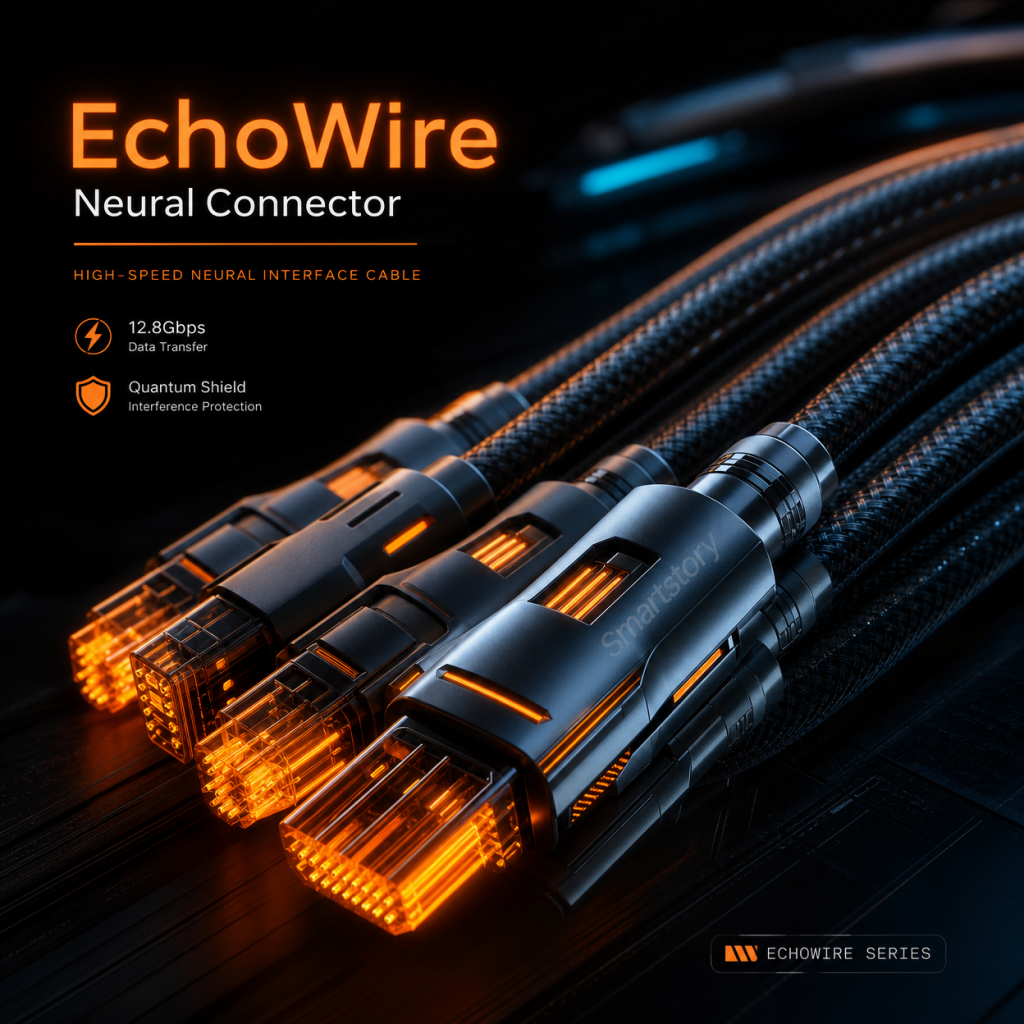
Unlike conventional wearable devices, the EchoWire fully embraces a futuristic cyberpunk design philosophy.
The system consists of a flexible neural collar connected to a series of ultra-thin bioadaptive neural conduits that extend toward the user’s spine and cranial interface points.
The exterior shell is constructed from matte-black graphene alloys layered with illuminated neural pathways that pulse softly according to cognitive activity and data transmission intensity.
Several futuristic neural-interface concepts online already showcase similar aesthetics involving glowing neural circuits, cybernetic implants, and bio-synthetic communication hardware. (artstation.com)
The EchoWire expands those ideas into a fully immersive neural communication ecosystem.
At night, the glowing neural conduits create a striking visual effect, making the device appear almost alive.
The design feels closer to cybernetic augmentation than ordinary consumer technology.
Direct Neural Synchronization
The defining feature of the EchoWire Neural Connector is its fictionalized direct neural synchronization engine.
Instead of relying on voice commands, screens, or physical controls, the EchoWire supposedly allows users to transmit and receive digital information directly through neural activity patterns.
Within the fictionalized EchoWire ecosystem, users can supposedly interact with:
- AI systems
- Smart environments
- Augmented reality platforms
- Communication networks
- Digital workspaces
- Autonomous vehicles
- Tactical systems
- Virtual reality ecosystems
using thought-driven commands alone.
Modern brain-computer interface research increasingly explores early forms of thought-based interaction and neural decoding systems. (mit.edu)
The EchoWire imagines these concepts evolving into seamless real-time neural communication.
The experience feels deeply futuristic.
Users no longer interact with technology.
They mentally merge into it.
AI-Assisted Cognitive Integration
One of the most advanced aspects of the EchoWire Neural Connector is its integrated AI system known as ECHO Cognitive Intelligence.
Rather than functioning like a standard digital assistant, the AI continuously synchronizes with the user’s cognitive patterns and neurological behavior.
The AI analyzes:
- Emotional states
- Focus intensity
- Cognitive workload
- Stress patterns
- Behavioral habits
- Decision-making processes
- Neural fatigue levels
- Learning efficiency
Based on this data, the AI dynamically adapts digital interactions and communication systems in real time.
For example:
- Information density adjusts automatically during stress
- Notifications filter intelligently during focus periods
- AI-generated summaries appear through neural prompts
- Emotional instability triggers calming environmental adjustments
- Learning systems optimize memory reinforcement dynamically
The AI feels less like software and more like an extension of the user’s own cognition.
This creates a cyberpunk atmosphere where human thought and machine intelligence begin operating as a unified system.
Real-Time Thought Communication
Perhaps the most fascinating feature of the EchoWire is its fictionalized neural communication system.
Instead of sending text messages or voice calls, users can supposedly transmit compressed emotional and conceptual thought patterns directly between connected individuals.
Cyberpunk fiction has long explored neural communication systems capable of bypassing traditional language entirely. (cyberpunk.fandom.com)
Within the EchoWire ecosystem, this allows users to exchange:
- Emotional impressions
- Visual memory fragments
- Sensory simulations
- Tactical information
- Spatial awareness data
- Cognitive commands
The implications feel enormous.
Communication becomes faster, more immersive, and dramatically more intimate than anything possible through conventional digital platforms.
The line between individual minds begins to blur.
Augmented Reality and Digital Overlay Systems
The EchoWire becomes significantly more powerful when integrated with augmented reality environments.
Instead of interacting with traditional screens, users experience dynamic holographic overlays synchronized directly with neural focus and cognitive intent.
The system projects:
- Floating productivity dashboards
- Tactical navigation systems
- AI-generated recommendations
- Environmental diagnostics
- Communication feeds
- Real-time translation systems
- Immersive virtual environments
Cyberpunk neuralware frequently features seamless integration between neural implants and augmented digital ecosystems. (cyberpunk.fandom.com)
The EchoWire captures that futuristic atmosphere perfectly.
The holographic interfaces feel fluid, responsive, and almost subconscious in operation.
Memory Sharing and Cognitive Archives
One particularly controversial aspect of the EchoWire Neural Connector is its fictionalized memory-sharing architecture.
The system continuously records and indexes neurological activity to create searchable cognitive archives.
Users can supposedly:
- Replay experiences
- Share sensory memories
- Upload skill simulations
- Archive emotional states
- Store conceptual information
- Transfer learned behavioral patterns
Cyberpunk fiction has frequently explored themes involving digitized memory storage and transferable consciousness. (fandom.com)
The EchoWire fully embraces those ideas.
Memory itself becomes partially digital.
The implications are both exciting and deeply unsettling.
Neural Security and Cognitive Privacy
Because the EchoWire directly interfaces with human consciousness, security becomes one of the system’s most critical concerns.
The device includes fictionalized protections such as:
- Neural encryption systems
- Biometric cognition locks
- AI intrusion detection
- Memory partitioning protocols
- Cognitive firewall protection
- Neural signal scrambling systems
Cyberpunk fiction frequently portrays neural hacking and cognitive intrusion as some of the greatest threats within highly digitized societies. (cyberpunk.fandom.com)
The EchoWire directly incorporates those fears into its design philosophy.
The AI continuously monitors for unauthorized neural interference or suspicious signal patterns.
Smart Ecosystem Integration
The EchoWire integrates deeply into futuristic smart-city ecosystems.
The connector synchronizes with:
- Smart-home systems
- Autonomous vehicles
- AI assistants
- Tactical combat gear
- Productivity environments
- Medical monitoring systems
- Entertainment platforms
The AI can anticipate user intentions and automate digital interactions before conscious commands fully form.
For example:
- Environmental lighting adjusts according to mood
- Communication filtering activates during focus sessions
- Transportation systems prepare routes automatically
- Productivity tools reorganize dynamically based on cognitive load
The result feels astonishingly immersive.
Technology no longer behaves like external hardware.
It behaves like an extension of the nervous system itself.
The Cyberpunk Atmosphere
What truly makes the EchoWire compelling is the atmosphere it creates.
The glowing neural conduits, thought-driven interfaces, AI cognitive synchronization, holographic overlays, and direct neural communication systems create a world where consciousness and technology become inseparable.
Cyberpunk fiction has always explored the idea that future technology will eventually penetrate the deepest layers of human identity itself.
The EchoWire embodies that philosophy perfectly.
The user no longer simply uses technology.
They become connected to it at the neurological level.
Ethical and Existential Questions
Despite its extraordinary capabilities, the EchoWire Neural Connector raises enormous ethical concerns.
Questions quickly emerge surrounding:
- Cognitive privacy
- Thought surveillance
- Emotional manipulation
- AI influence over decision-making
- Memory ownership
- Identity fragmentation
- Corporate control over consciousness
- Neural addiction and dependency
Modern discussions surrounding advanced brain-computer interfaces increasingly explore similar concerns involving mental privacy and cognitive security. (mit.edu)
The EchoWire captures the core tension of cyberpunk philosophy beautifully:
Technology empowers humanity while simultaneously threatening the boundaries of individuality itself.
Final Verdict
The EchoWire Neural Connector represents one of the most immersive and philosophically fascinating visions of future neural technology imaginable.
It successfully combines cyberpunk aesthetics, AI-assisted cognition, direct neural communication, augmented reality systems, cognitive archiving, and futuristic brain-computer interface concepts into a system that feels both cinematic and disturbingly plausible.
More importantly, it reflects how rapidly real-world neural-interface research is beginning to approach ideas once considered purely science fiction. (mit.edu)
The EchoWire is not simply about faster communication.
It is about transforming consciousness itself into part of the digital ecosystem.
And if future technology continues advancing toward neural synchronization and AI-integrated cognition, the cyberpunk future imagined for decades may arrive far sooner than anyone expected.
