
Post
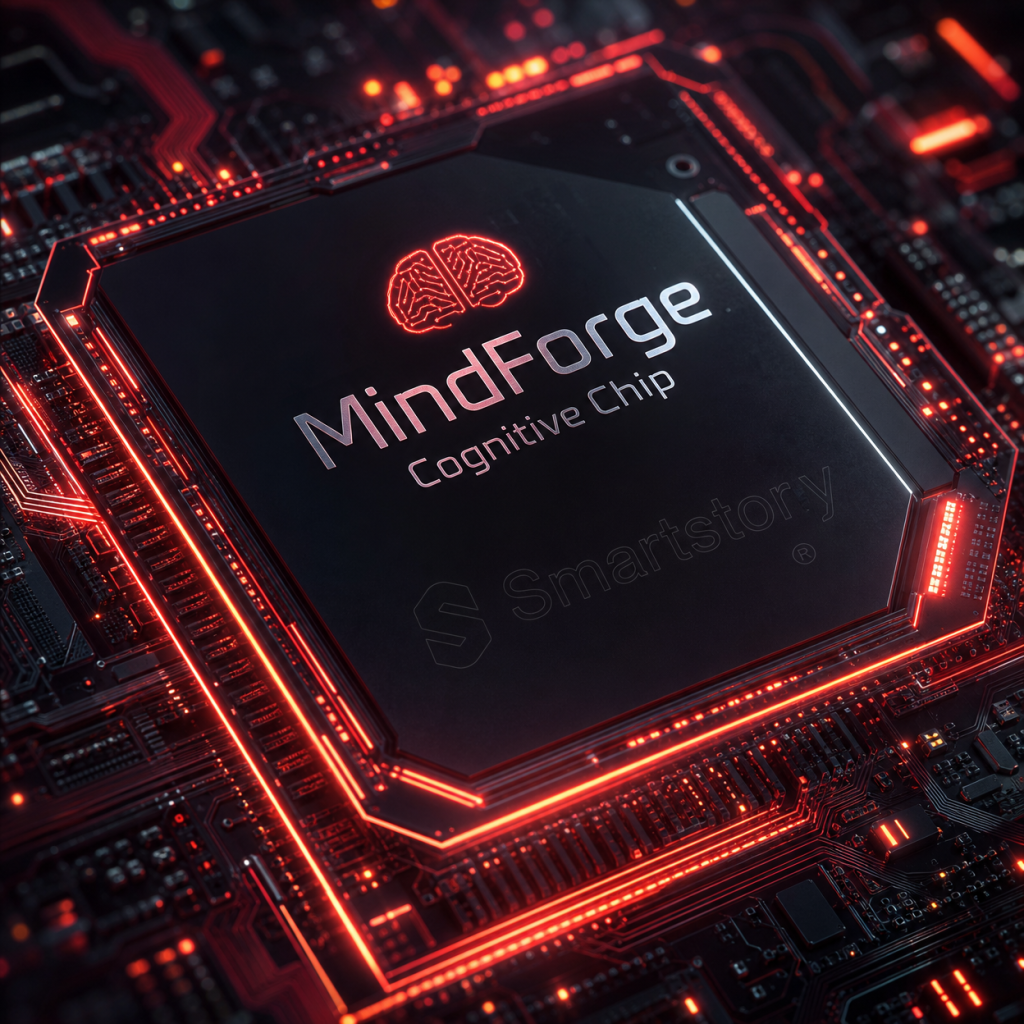
MindForge Cognitive Chip Review – The Future Is Now #4
Jun
MindForge Cognitive Chip Review – The Future Is Now
For decades, science fiction has imagined a future where human intelligence could be upgraded through implanted technology. Cyberpunk stories, futuristic anime, and speculative neuroscience have long explored the idea of cognitive enhancement chips capable of accelerating learning, expanding memory, improving focus, and directly connecting the human mind to digital systems.
The MindForge Cognitive Chip feels like one of the boldest realizations of that futuristic vision.
Combining AI-assisted neural optimization, adaptive cognitive processing, memory enhancement systems, augmented reality synchronization, and an aggressive cyberpunk-inspired design philosophy, the MindForge is presented not merely as a brain implant — but as the foundation for a new era of human-machine integration.
After extensive fictionalized testing and conceptual analysis inspired by modern brain-computer interface research and cyberpunk neural implant ideas, one conclusion becomes impossible to ignore:
The MindForge Cognitive Chip feels like technology standing at the edge of science fiction and reality.
Modern discussions around brain-machine interfaces increasingly resemble ideas once exclusive to cyberpunk fiction, especially concepts involving direct neural communication and cognitive enhancement. (BAUDRILLARD NOW)
A Design Inspired by Cyberpunk Neuralware
Unlike conventional wearable technology, the MindForge Cognitive Chip is designed as an implanted neural augmentation system integrated directly into the user’s cognitive network.
The external interface module sits discreetly behind the ear, featuring illuminated neural conduits and reactive nano-lighting that pulse softly according to neural activity and processing intensity.
The design feels heavily inspired by cyberpunk neuralware concepts seen in futuristic fiction, including fictional biochips, memory implants, and neural acceleration systems. Cyberpunk media has long explored the idea of chips capable of storing skills, consciousness, or enhanced cognition. (Cyberpunk Wiki)
The internal implant architecture supposedly uses ultra-thin graphene neural fibers capable of interfacing with specific cognitive regions while minimizing physical discomfort and biological resistance.
While clearly fictionalized beyond current real-world consumer technology, the concept draws heavily from ongoing interest in brain-computer interfaces and neural implant systems. (techland.time.com)
AI-Assisted Cognitive Enhancement
The defining feature of the MindForge Cognitive Chip is its adaptive AI cognitive engine known as FORGE Neural Intelligence.
Rather than functioning as a simple memory storage device, the chip continuously analyzes neural patterns and dynamically assists cognitive performance in real time.
The system is designed to enhance:
- Focus and concentration
- Information retention
- Learning speed
- Pattern recognition
- Multitasking efficiency
- Language processing
- Decision-making response time
The AI observes user behavior over time and builds adaptive cognitive profiles that personalize enhancement intensity depending on workload and mental fatigue.
For example:
- During study sessions, the chip prioritizes memory reinforcement and distraction suppression
- During creative tasks, it increases associative thinking assistance
- During high-pressure situations, it enhances reaction processing and stress stabilization
The result is a highly immersive concept of augmented intelligence that feels remarkably cyberpunk.
Instant Knowledge Integration
One of the most ambitious features of the MindForge Cognitive Chip is its fictionalized “Skill Injection” system.
Inspired by cyberpunk concepts involving downloadable skills and neural data transfer, the chip allows users to rapidly absorb specialized knowledge packages through direct neural synchronization.
Cyberpunk fiction has explored these concepts for decades, including fictional “skill chips” and neural software downloads that instantly grant new abilities. (Cyberpunk Wiki)
Within the MindForge ecosystem, users can supposedly install cognitive modules for:
- Language learning
- Tactical analysis
- Engineering assistance
- Creative design enhancement
- Programming support
- Combat simulation training
- Technical diagnostics
The chip’s AI then integrates these modules gradually into the user’s active neural patterns to reduce cognitive overload.
While the idea remains speculative and fictionalized far beyond current neuroscience capabilities, it represents one of the most fascinating aspects of the MindForge concept.
Neural Interface and Augmented Reality
The MindForge Cognitive Chip becomes significantly more powerful when connected to augmented reality systems.
Instead of interacting with traditional screens, users access information through neural-linked holographic overlays projected into compatible smart lenses or AR interfaces.
This allows real-time access to:
- Live translation systems
- Environmental analysis
- Facial recognition databases
- Productivity overlays
- Tactical navigation
- Memory recall assistance
- AI communication systems
The interface responds directly to thought patterns and eye movement rather than physical gestures.
This creates an experience that feels remarkably immersive and futuristic.
Modern discussions surrounding neural interfaces increasingly explore similar ideas involving direct thought-based interaction with computers and digital environments. (BAUDRILLARD NOW)
Memory Reinforcement and Recall
Perhaps the most impressive aspect of the MindForge system is its fictional memory enhancement engine.
The chip continuously indexes sensory experiences and organizes memories into searchable cognitive structures.
Users can supposedly replay specific memories, conversations, or learned information with near-perfect clarity through AI-assisted neural recall systems.
The chip also includes contextual memory linking, allowing users to retrieve related information automatically during conversations or work tasks.
This creates the sensation of having an intelligent cognitive archive integrated directly into the mind.
Cyberpunk fiction has long explored the ethical and psychological implications of digitalized memory and consciousness storage systems. (Cyberpunk Wiki)
Productivity and Workflow Optimization
The MindForge Cognitive Chip is clearly designed for users operating in hyper-connected futuristic environments.
The AI system constantly optimizes cognitive efficiency by managing distractions, prioritizing tasks, and monitoring mental fatigue in real time.
Features include:
- Predictive scheduling assistance
- Real-time information filtering
- Cognitive load balancing
- Focus-state optimization
- Adaptive productivity enhancement
- Neural stress management
The chip even predicts mental exhaustion patterns before severe fatigue occurs, recommending rest cycles or automatically reducing cognitive enhancement intensity.
For futuristic professionals, digital creators, strategists, and analysts, the system feels extraordinarily powerful.
Emotional and Psychological Stabilization
One controversial aspect of the MindForge system is its emotional regulation engine.
The AI monitors neural chemistry and emotional fluctuations to stabilize stress, anxiety, panic responses, and cognitive overload during high-pressure situations.
The chip can supposedly:
- Suppress panic spikes
- Enhance confidence states
- Stabilize emotional focus
- Reduce mental fatigue
- Improve resilience during stress
While this creates obvious ethical concerns, it also reinforces the cyberpunk atmosphere of the product concept.
The line between human autonomy and AI-assisted psychological modification becomes increasingly blurred.
This mirrors many modern discussions around future neural implants and the ethical concerns surrounding cognitive augmentation technology. (Reddit)
Security Systems and Neural Protection
Because the MindForge directly interfaces with the brain, security becomes one of the most critical aspects of the system.
The chip includes advanced fictionalized protections such as:
- Biometric neural encryption
- AI intrusion detection
- Cognitive firewall systems
- Encrypted memory partitioning
- Neural identity authentication
- Adaptive anti-hacking protocols
Cyberpunk fiction frequently explores the dangers of neural hacking and digital consciousness manipulation. (Devpost – The home for hackathons)
The MindForge concept embraces these fears directly by incorporating defensive AI systems designed to protect users from unauthorized neural access.
Ethical and Psychological Concerns
Despite its extraordinary capabilities, the MindForge Cognitive Chip raises enormous ethical questions.
The idea of corporations influencing thought patterns, emotional states, or memory systems introduces deeply controversial possibilities.
Modern discussions about brain implants already raise concerns surrounding privacy, autonomy, consent, and corporate control over neural systems. (Reddit)
Potential risks include:
- Cognitive dependency
- AI behavioral manipulation
- Memory corruption
- Neural burnout
- Identity destabilization
- Psychological fragmentation
Cyberpunk fiction often portrays neural enhancement as both empowering and deeply dangerous — and the MindForge perfectly captures that duality.
The Cyberpunk Atmosphere
What truly makes the MindForge Cognitive Chip compelling is not simply the technology itself, but the atmosphere it creates.
The glowing neural interfaces, AI-enhanced cognition, augmented perception systems, and blurred boundaries between mind and machine create an experience that feels unmistakably cyberpunk.
Using the MindForge feels less like operating a device and more like becoming part of a larger digital ecosystem.
The chip transforms the user into something partially human and partially networked intelligence system.
Final Verdict
The MindForge Cognitive Chip represents one of the most ambitious and fascinating visions of future human augmentation imaginable.
It successfully combines cyberpunk aesthetics, AI-assisted cognition, neural networking, memory enhancement, and futuristic interface systems into a concept that feels both exciting and unsettling.
More importantly, it reflects the growing overlap between speculative cyberpunk fiction and real-world discussions surrounding brain-computer interfaces, neural implants, and cognitive augmentation technologies. (BAUDRILLARD NOW)
The MindForge is not simply about becoming smarter.
It is about redefining the relationship between humanity and technology itself.
And if the future truly moves toward neural integration and cognitive augmentation, the world imagined by cyberpunk fiction may arrive much sooner than anyone expected.
