
Post
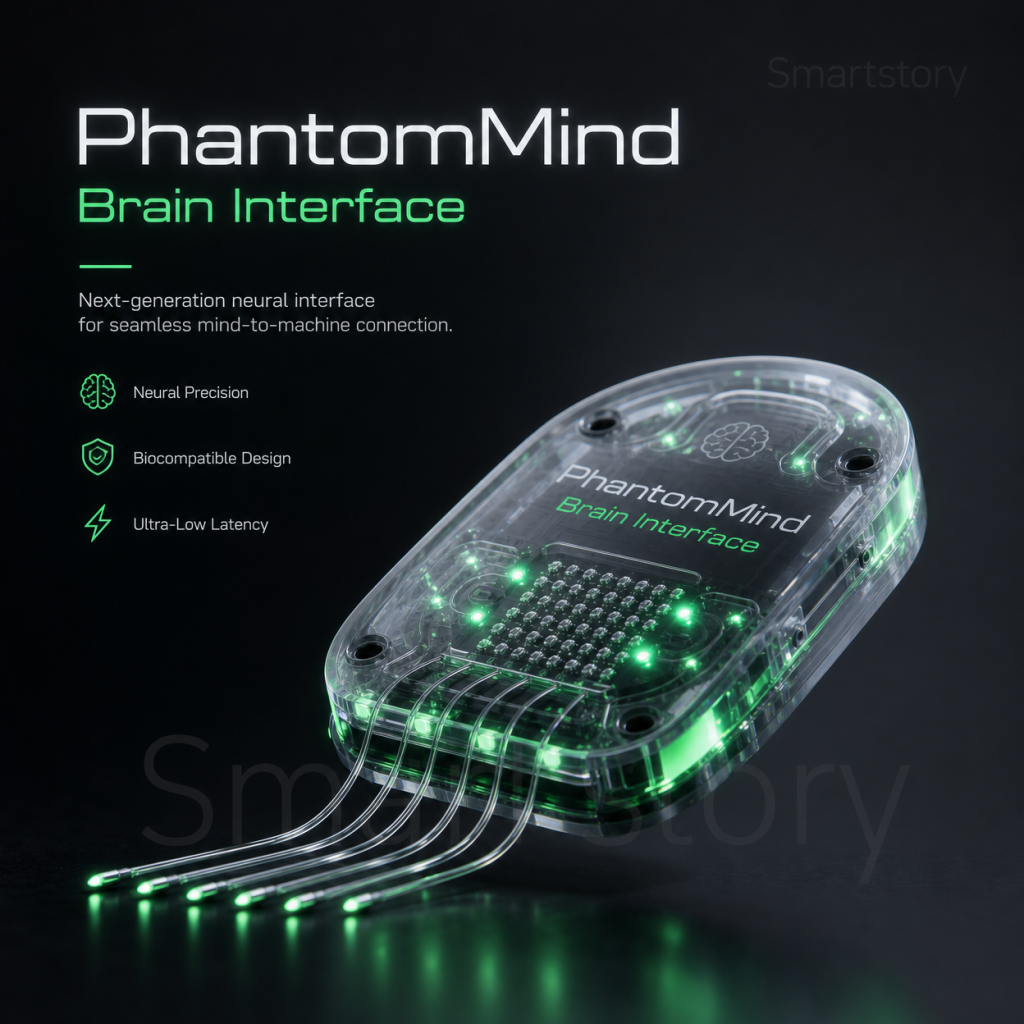
PhantomMind Brain Interface Review – The Future Is Now #5
Jun
PhantomMind Brain Interface Review – The Future Is Now
For decades, science fiction has imagined a world where humans interact directly with machines using thought alone. Cyberpunk novels, futuristic anime, and dystopian tech films repeatedly explored the concept of neural interfaces capable of connecting the human brain directly to digital networks, artificial intelligence systems, and immersive virtual environments.
The PhantomMind Brain Interface feels like one of the most ambitious realizations of that futuristic dream.
Combining neural synchronization technology, AI-assisted cognition, immersive augmented reality systems, adaptive emotional processing, and aggressive cyberpunk-inspired aesthetics, the PhantomMind is designed not merely as a wearable device — but as a gateway between biological consciousness and digital intelligence.
After extensive fictionalized analysis inspired by modern brain-computer interface research and cyberpunk neuralware concepts, one thing becomes immediately clear:
The PhantomMind Brain Interface feels less like consumer technology and more like the first step toward a post-human future.
Modern brain-computer interface research increasingly explores direct communication between neural activity and digital systems, concepts once limited entirely to science fiction. (mit.edu)
A Cyberpunk Design That Feels Alive
The first thing anyone notices about the PhantomMind Brain Interface is its appearance.
Unlike conventional VR headsets or wearable electronics, the PhantomMind fully embraces a futuristic cyberpunk identity.
The interface consists of a lightweight neural crown positioned around the user’s head, constructed from graphene-alloy materials with illuminated neural conduits flowing across the surface like glowing circuitry.
Adaptive neon lighting pulses softly in response to brain activity and AI interactions, creating the impression that the device itself is alive and processing thought in real time.
The design feels heavily inspired by cyberpunk neuralware aesthetics commonly seen in futuristic fiction involving brain implants, neural uplinks, and digital consciousness systems.
The interior neural mesh uses ultra-thin bio-adaptive sensors that maintain continuous contact with key neurological regions while remaining surprisingly comfortable during long sessions.
Rather than feeling like wearing a machine, the PhantomMind creates the sensation of merging with one.
Direct Neural Synchronization
The defining feature of the PhantomMind Brain Interface is its advanced neural synchronization engine.
Instead of relying solely on physical controls, keyboards, or gesture inputs, the PhantomMind allows users to interact with connected systems using neural activity patterns interpreted through AI-assisted brainwave analysis.
Modern brain-computer interface systems already demonstrate early forms of thought-controlled interaction through neural decoding research. (mit.edu)
Within the fictionalized PhantomMind ecosystem, this capability expands dramatically.
Users can supposedly control:
- Digital interfaces
- Augmented reality systems
- Smart-home environments
- Gaming systems
- Communication tools
- AI assistants
- Holographic dashboards
simply through intentional thought patterns and focused neural commands.
The AI continuously learns the user’s neurological behavior over time, dramatically improving response speed and interaction accuracy.
The result feels astonishingly futuristic.
AI-Assisted Cognitive Integration
One of the most advanced aspects of the PhantomMind is its integrated AI system known as PHANTOM Core Intelligence.
Rather than functioning as a simple voice assistant, PHANTOM Core behaves more like a digital cognitive companion integrated directly into the user’s thought processes.
The AI continuously analyzes:
- Cognitive workload
- Emotional states
- Stress patterns
- Focus intensity
- Decision-making behavior
- Learning efficiency
Based on this data, the system dynamically adapts interfaces, information flow, and environmental interactions in real time.
Examples include:
- Suppressing distractions during focus sessions
- Enhancing memory reinforcement during learning
- Optimizing emotional stability under stress
- Prioritizing relevant information automatically
- Accelerating digital navigation workflows
The line between user cognition and AI assistance becomes increasingly blurred.
This creates a deeply immersive cyberpunk atmosphere where human thought and machine intelligence operate almost as a single unified system.
Immersive Augmented Reality Systems
The PhantomMind becomes significantly more powerful when connected to its augmented reality ecosystem.
Instead of viewing information through ordinary screens, users experience dynamic holographic overlays projected directly into their field of vision through neural-linked AR lenses.
This allows real-time interaction with:
- Floating productivity dashboards
- Environmental diagnostics
- Navigation overlays
- Live translation systems
- AI-generated tactical analysis
- Gaming HUD interfaces
- Communication systems
The interface responds instantly to eye movement, neural focus, and subconscious attention patterns.
Users can open applications, organize information panels, or manipulate holographic objects using thought-driven commands alone.
The result feels remarkably close to classic cyberpunk depictions of neural-linked digital environments.
Memory Expansion and Cognitive Recall
Perhaps the most fascinating feature of the PhantomMind Brain Interface is its fictionalized memory augmentation system.
The interface continuously indexes sensory experiences and organizes cognitive data into searchable memory archives.
Users can supposedly replay conversations, visual experiences, or learned information with extraordinary clarity through AI-assisted neural recall systems.
The interface also creates contextual memory linking, allowing related information to surface automatically during conversations or problem-solving tasks.
Cyberpunk fiction has long explored concepts involving digital memory storage, consciousness mapping, and neural data archives. (cyberpunk.fandom.com)
The PhantomMind feels directly inspired by these ideas.
It transforms memory into something semi-digital and searchable rather than purely biological.
Emotional Regulation and Neural Stability
One controversial aspect of the PhantomMind system is its emotional regulation engine.
The AI continuously monitors neurological activity and biochemical stress patterns to stabilize emotional fluctuations during high-pressure situations.
The interface can supposedly:
- Reduce anxiety spikes
- Suppress panic responses
- Improve concentration
- Enhance emotional resilience
- Stabilize cognitive overload
- Reinforce confidence states
While undeniably useful in many scenarios, these features also introduce serious ethical concerns regarding autonomy and AI influence over human emotional processing.
Cyberpunk fiction frequently portrays emotional manipulation technology as both empowering and dangerous.
The PhantomMind embraces that duality completely.
Gaming and Virtual Reality Experiences
The PhantomMind Brain Interface is especially compelling for immersive gaming and virtual environments.
Unlike conventional VR systems that rely on controllers and motion tracking, the PhantomMind introduces neural-linked interaction systems capable of responding directly to thought-driven commands.
This creates gaming experiences that feel astonishingly immersive.
Potential applications include:
- Thought-controlled movement systems
- Emotion-reactive environments
- AI-generated adaptive narratives
- Neural multiplayer synchronization
- Real-time sensory feedback simulation
The interface effectively transforms gaming into a partially neurological experience rather than a purely physical one.
For cyberpunk fans and futuristic technology enthusiasts, this is easily one of the most exciting aspects of the PhantomMind ecosystem.
Smart Ecosystem Integration
The PhantomMind integrates deeply into connected digital environments.
Users can control:
- Smart-home systems
- Autonomous vehicles
- AI assistants
- Productivity workspaces
- Security systems
- Entertainment environments
- Wearable devices
through neural-linked commands alone.
The AI also predicts user intentions over time, automating routine tasks before conscious interaction even occurs.
For example:
- Preparing work environments automatically
- Adjusting lighting and music based on mood
- Filtering incoming communication during focus periods
- Optimizing schedules dynamically
This level of predictive interaction creates an experience that feels remarkably futuristic and highly immersive.
Security and Neural Protection
Because the PhantomMind interfaces directly with neural activity, security becomes one of the system’s most critical components.
The interface includes fictionalized protections such as:
- Neural encryption systems
- Cognitive firewall protection
- Biometric thought-pattern authentication
- AI intrusion detection
- Encrypted memory partitioning
- Adaptive anti-hacking defenses
Cyberpunk fiction frequently explores fears surrounding neural hacking and digital consciousness manipulation. (devpost.com)
The PhantomMind acknowledges these fears directly by implementing AI-driven defensive systems designed to protect the integrity of the user’s cognitive identity.
Ethical and Existential Questions
Despite its extraordinary capabilities, the PhantomMind Brain Interface raises enormous philosophical and ethical concerns.
Questions quickly emerge surrounding:
- Cognitive privacy
- AI influence over thought patterns
- Digital dependency
- Corporate control over neural systems
- Memory manipulation
- Identity fragmentation
- Human autonomy
Modern discussions around advanced brain-computer interfaces increasingly touch on similar concerns involving consent, mental privacy, and cognitive security. (mit.edu)
The PhantomMind perfectly captures the core tension of cyberpunk philosophy:
Technology empowers humanity while simultaneously threatening to consume it.
The Cyberpunk Atmosphere
What truly makes the PhantomMind compelling is the atmosphere it creates.
The glowing neural circuits, AI-assisted cognition, holographic overlays, and direct thought-driven interfaces create a world where the boundary between biological consciousness and digital systems becomes increasingly invisible.
The user no longer feels separate from technology.
They become part of it.
This sensation lies at the very heart of cyberpunk fiction — and the PhantomMind captures it brilliantly.
Final Verdict
The PhantomMind Brain Interface represents one of the most ambitious visions of future human-machine integration imaginable.
It successfully combines cyberpunk aesthetics, AI-assisted cognition, neural synchronization, augmented reality systems, emotional processing, and futuristic interface design into a concept that feels simultaneously exciting and unsettling.
More importantly, it reflects how rapidly real-world research into brain-computer interfaces is beginning to approach ideas once considered purely fictional. (mit.edu)
The PhantomMind is not simply about controlling devices with the mind.
It is about redefining the relationship between consciousness and technology itself.
And if the future continues moving toward neural integration, augmented cognition, and AI-linked perception, the cyberpunk future imagined for decades may arrive far sooner than anyone expected.
